Materials
Why we choose materials before we draw
On most of our houses, the first decision is not the plan but a stone, a timber or a concrete mix. A note on working from the material outwards, and what it changes on site.
- Written by
 Julian OkoroDesign Director
- Published
- Reading time
- 3 min read
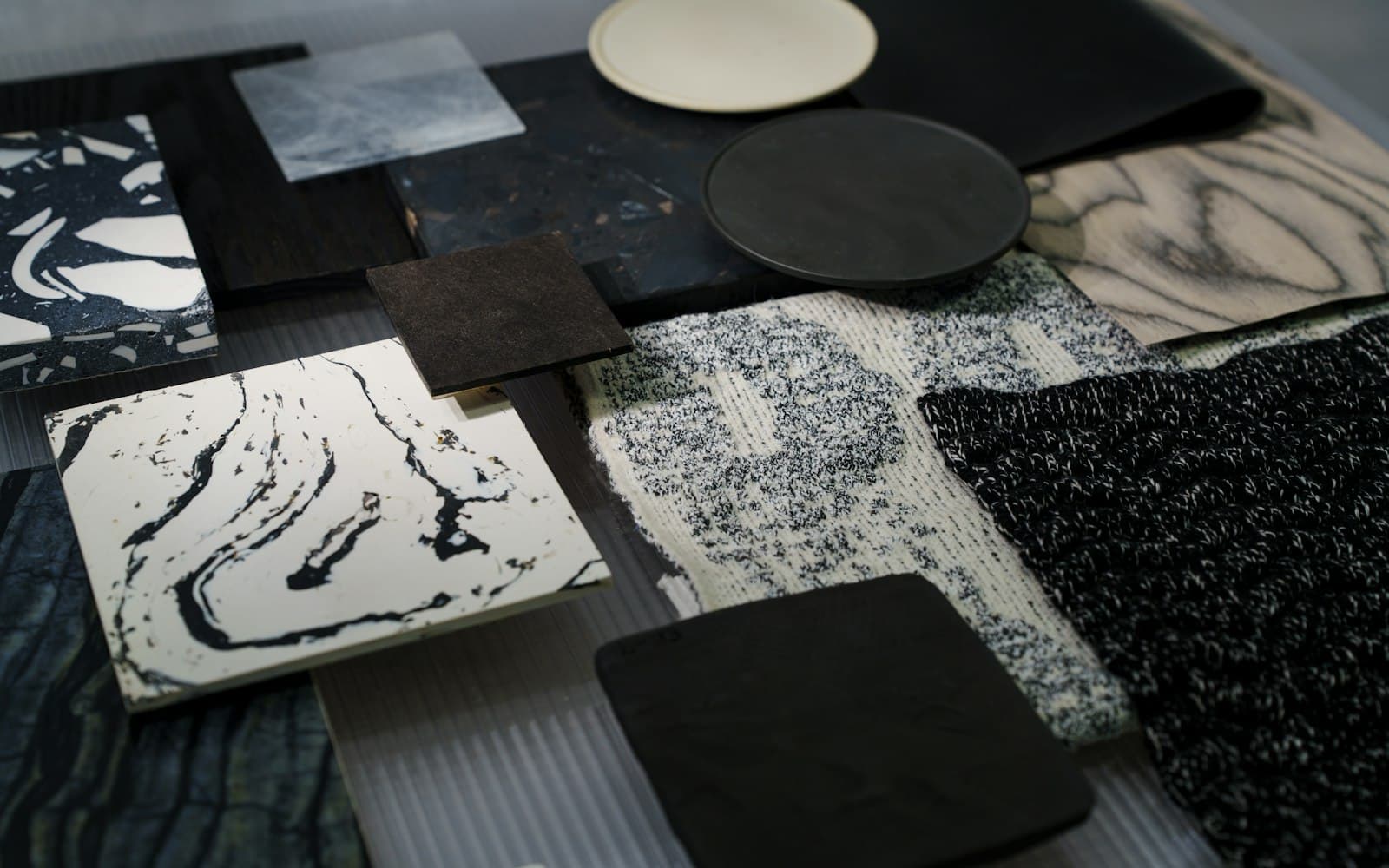
The first meeting on a new house usually ends with a box. Not a sketch, not a plan, but a cardboard box of samples we leave with the client: two or three stones, an offcut of timber, a small cast of concrete, a piece of lime plaster. We ask them to keep it on the kitchen table for a week and to touch it every day.
It is an odd way to start a building. It is also the most reliable way we have found to make one that people still like in twenty years.
Drawings lie, materials do not
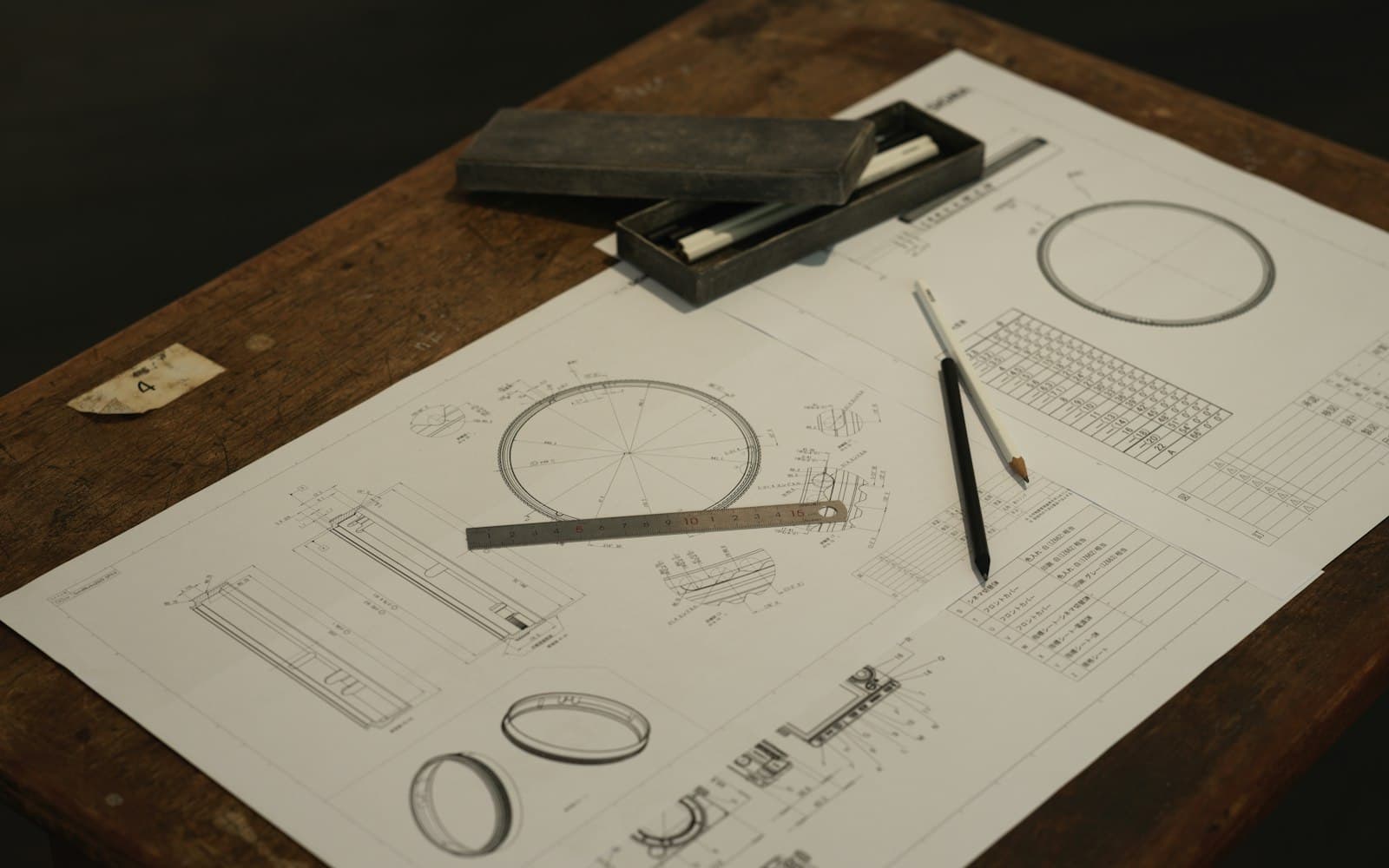
A plan is a set of decisions about space. It is honest about distances and proportions, but it says almost nothing about how a room will feel at seven in the morning in February. That depends on what the walls are made of, how they take the light and how they sound when someone walks across the floor.
When a project starts from drawings, materials are chosen late, often under budget pressure, and the building ends up wearing whatever the contractor can source quickly. When a project starts from materials, the drawings bend around them. Wall thicknesses, window depths and even the position of the stair follow from what the walls are.
How we pick the palette
We limit every house to three primary materials. A fourth is allowed only if it does a job none of the others can.
- One for the ground. Usually a stone or a concrete that can take water, weight and decades of wear.
- One for the hand. Something warm that people touch every day: oak, walnut, lime plaster.
- One for the light. A surface that changes through the day: a pale render, a polished floor, a screen of timber slats.
The constraint is the point. A house with eleven materials looks like a showroom. A house with three looks like it grew there.
Where we look first
We start within a hundred kilometres of the site. Local stone has already survived the local weather, local timber is cut for local spans, and a quarry two valleys away is easier to visit than a catalogue. On a recent house in the hills we used a limestone from the same ridge, and the walls now read as part of the landscape rather than an object placed on it.
A material that has spent ten thousand years in the ground next door will not be surprised by the rain.
Testing on site, not on screen
Renderings are good at selling a building and poor at predicting it. Before we commit to a material we make a sample panel on site, at full scale, and leave it there through at least one change of season.
We look at it in the morning and at dusk. We pour water on it. We ask the client to lean against it. More than once a stone that looked perfect in the studio turned out too cold in the real light, and a concrete we nearly rejected became the reason the whole house works.
What the panels taught us
- Colour shifts more than you expect. A warm grey indoors can read blue against a north sky.
- Joints matter as much as surfaces. A badly proportioned joint can ruin the best stone.
- Clients decide faster with their hands than with their eyes.
What it changes for the budget
Starting from materials sounds expensive. In practice it is the opposite. When the palette is fixed early, the quantity surveyor can price it properly from the first stage, and there are no late substitutions that ripple through the details. We spend more per square metre on fewer things, and less on the corrections that come from changing our minds.
It also changes how contractors work with us. A mason who knows from the first meeting that the wall is the project, not a finish applied at the end, treats it differently. On site, that respect is visible in every course.
The box on the kitchen table
At the end of the week we collect the box. Some samples come back untouched. One usually comes back with a worn corner, because someone kept picking it up. That is the material we build the house around.